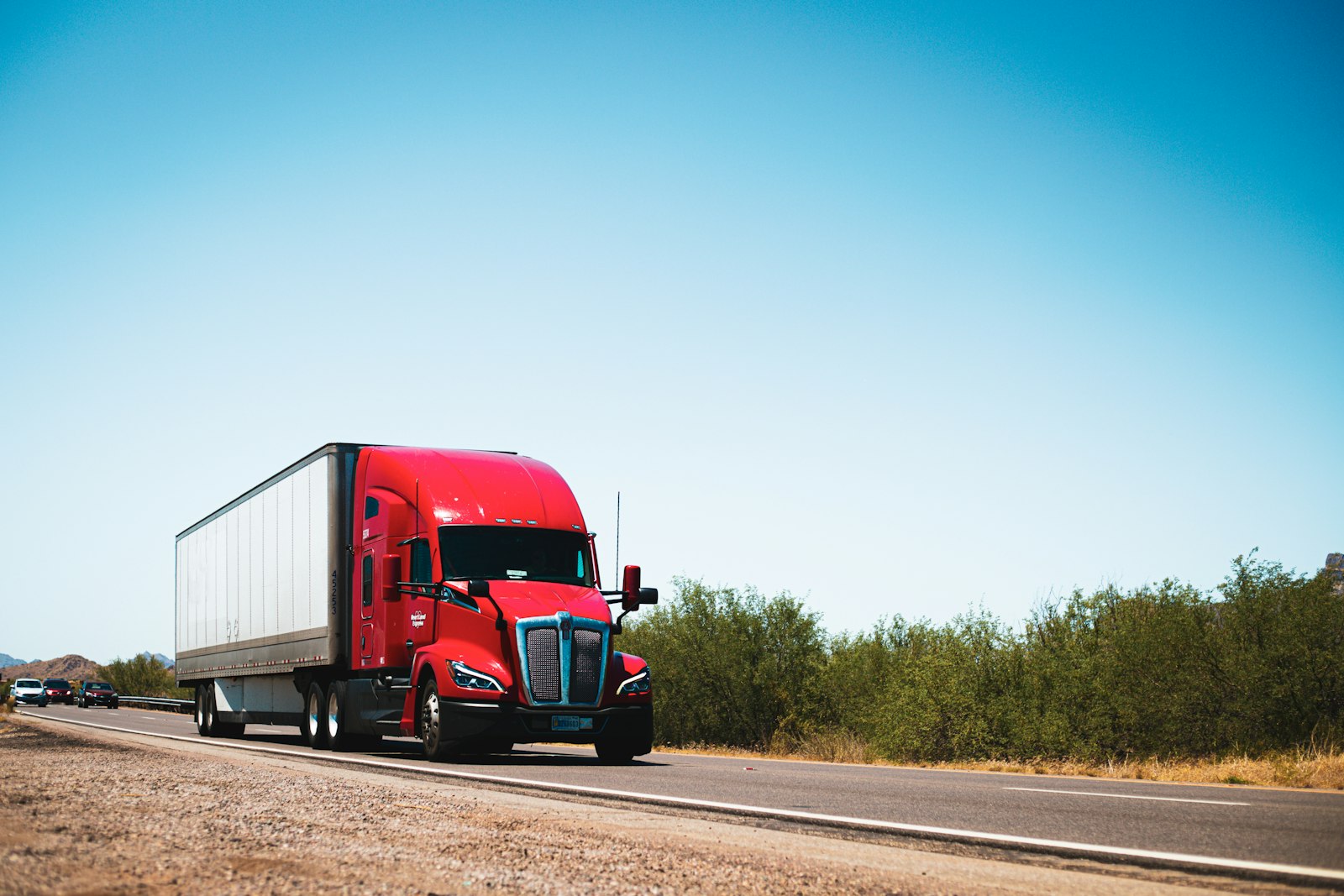
You’ve booked the move, the truck pulls away with everything you own, and the only question left is when it shows up at the other end. So how long does a long-distance move take to deliver? The honest answer is a range, usually somewhere from a few days to a couple of weeks after pickup. Here is what sets that range and how to plan around it.
How long a long-distance move takes: a window, not a single date
Most interstate carriers quote a delivery window, a spread of days rather than one guaranteed date. A short haul of a few hundred miles can land in a couple of days. A cross-country move often runs one to two weeks. Those are typical ranges, not promises, and the spread is normal for how long-haul household goods move.
That can feel unsatisfying when you want a number. But a realistic window you can trust beats a single date that turns out to be a guess. The rest of this explains why the window exists, so it stops feeling like a black box.
Why interstate movers quote a spread of days
Four things drive your delivery window. Understanding them makes the estimate make sense.
Distance and route. The miles are the obvious part, but the route matters as much as the mileage. A truck headed down a busy interstate corridor moves faster than one serving a rural destination off the main lanes. Weather, construction, and mountain passes can all add time.
Federal driving limits. A truck is not a straight shot. By federal law, a driver may drive a maximum of 11 hours after 10 consecutive hours off duty, and cannot drive past the 14th hour after coming on duty. Drivers also take a 30-minute break after 8 hours of driving. These are the FMCSA hours-of-service rules, and they exist for everyone’s safety on the road. In practice, a driver can only cover a limited number of miles per day, so a 2,000-mile move takes several days of driving even before anything else is factored in.
Consolidation. On many long-distance moves, your shipment might share a trailer with other households heading the same direction. Combining loads is efficient and helps control cost, but it means the truck follows a route with more than one stop. Your goods may be picked up, then delivered in the sequence that makes sense for the whole load. This is the single biggest reason carriers quote a window instead of a date: the schedule flexes around the other stops on the route.
Season. Timing changes everything. Moving demand concentrates heavily in late spring and summer, and industry groups estimate a large share of all U.S. moves happen between roughly May and September, with June, July, and August being the busiest. When trucks and crews are in high demand, windows stretch. A move in the middle of winter often delivers faster than the same route in July.
Your delivery date belongs on paper
Here is the part that protects you, and it is worth knowing before you sign anything. Federal rules require your mover to provide what is called reasonable dispatch service, and to deliver your shipment on the agreed date or within the window written on your bill of lading. If the carrier cannot meet that window, it has to notify you and give you new dates. Those are the FMCSA rules on transporting your shipment.
Two things follow from that. First, get your delivery window in writing on the order for service and the bill of lading. Do not accept a vague “as soon as possible.” A written window is enforceable; a verbal promise is not. Second, if a delay through the carrier’s own fault costs you money you would not otherwise have spent, you may be able to recover it through what the rules call an inconvenience or delay claim. Knowing your rights up front makes the wait predictable instead of open-ended.
If you are checking out any carrier before you book, look it up on the federal register. For Haul Co, the carrier on the record is Hauling Authority LLC, USDOT 4435598, MC 1745912.
How to plan around the window
You cannot shrink the miles or rewrite the driving rules, but you can plan so the window works for you.
- Ask for the window in writing and ask what it depends on. A good carrier will tell you the realistic spread and what could make it earlier or later.
- Pack a first-week bag you carry yourself. Medications, chargers, a few days of clothes, important documents, and basic toiletries ride with you, not on the truck. If delivery lands on the later end of the window, you are covered.
- Do not schedule anything that can’t flex on the first delivery day. Line up flexibility for the back half of the window, not just the front.
- Book early in peak season. If you are moving between May and September, reserving your dates well ahead gives you a tighter, more predictable window. Our long-distance moving timeline guide walks through when to lock each step.
- Confirm the details before pickup. Addresses, contact numbers, and building rules at both ends. Our guide to what happens on moving day covers the paperwork to check before the truck leaves.
Tracking turns waiting into knowing
The hardest part of a delivery window is not the length, but not knowing. The old way meant calling a dispatcher who then called a driver, and you waited for a callback to learn roughly where your things were.
That’s one of the problems Haul Co was built to solve. You get digital tracking, so you can see your shipment’s status instead of guessing at it. And because Haul Co runs the move as one company from pickup to delivery, with no brokers and no handoffs, one accountable team answers for your dates the whole way. There is no finger-pointing between a broker who sold the job and a carrier you never met. The company that quoted your window is the team that delivers it.
That accountability starts at booking. Haul Co gives you one guaranteed, binding price in about two minutes, locked in with no surprise charges on move day, and a virtual home survey follows on your own schedule to confirm the inventory. Full value protection is included on every move, covering your goods up to the lesser of their declared value or $100,000 if something is lost or damaged in transit. Note that this is cargo liability coverage, not a separate insurance policy.
A delivery window will always be a range, because trucks, routes, and driving limits are real. What you can control is whether you spend that window in the dark or knowing where your things are. Get your guaranteed price and move with the guesswork taken out.