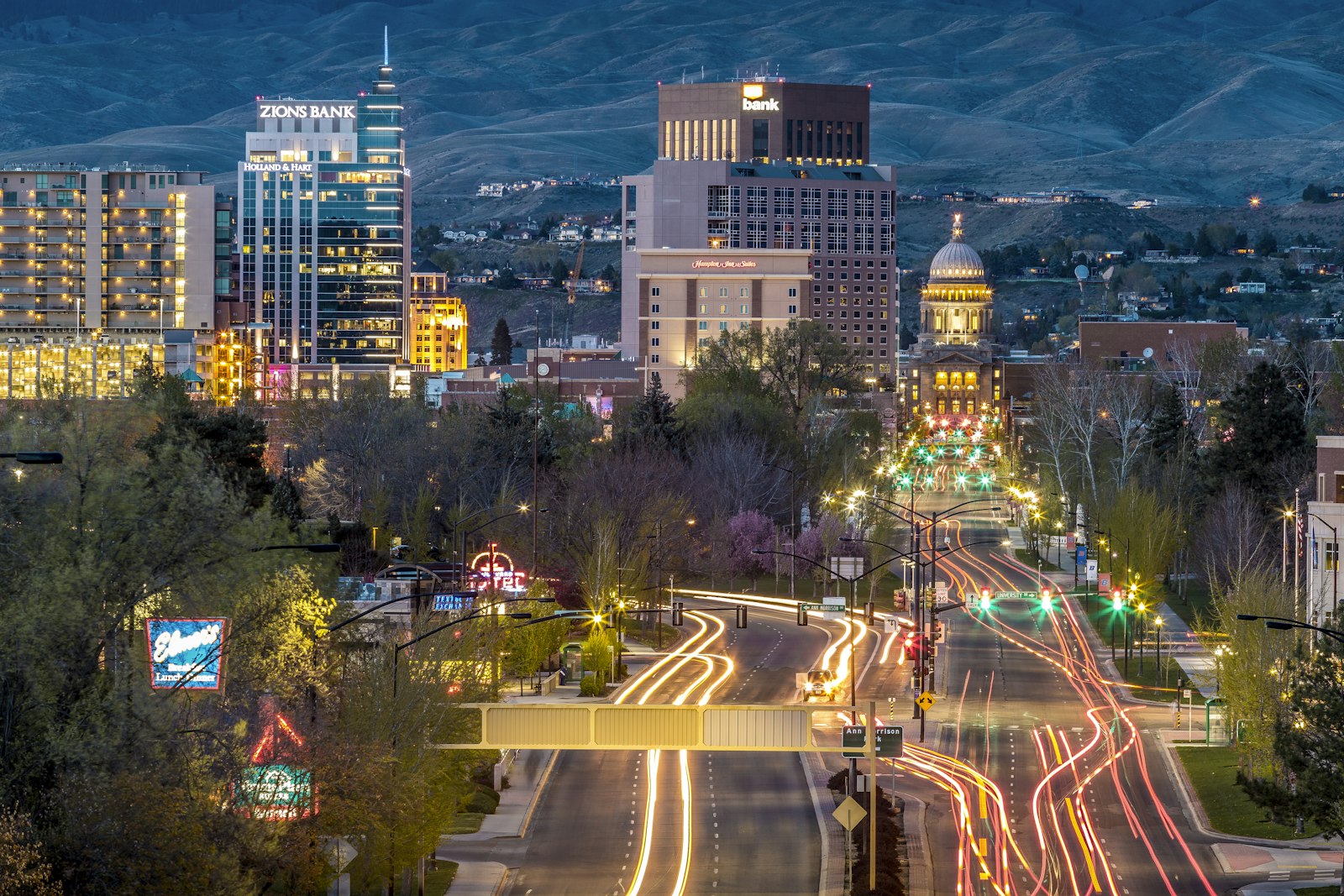
Idaho keeps landing near the top of the lists that track where Americans are headed. United Van Lines and Atlas Van Lines both put the Gem State among the leading inbound destinations for 2025, and the Census Bureau counted Idaho as one of the fastest-growing states in the country. If you are moving to Idaho, you are joining a well-worn path. This guide covers why people come, where they settle, what a home and a week of groceries actually cost, and how to run the move itself so nothing surprises you on delivery day.
Why people are moving to Idaho
The reasons are practical, not trendy. In the United Van Lines data, family was the single biggest driver for people moving into Idaho, followed by retirement, then jobs and lifestyle. Roughly seven in ten inbound movers were 55 or older, which tracks with the retirement pull and with adults relocating to be near grown kids and grandkids.
A lot of that migration comes from pricier neighboring states: Washington, California, and Utah supply much of the inflow. For households cashing out of a pricier market, Idaho offers space, outdoor access, and a lower overall cost of living without leaving the West.
The surge has cooled from its early-2020s peak. Idaho is still growing, at roughly 1.4 percent a year by recent Census estimates, but the frenzy has settled. That is good news if you are the one moving in. Less bidding-war pressure, a bit more room to choose.
Where to land: Boise and beyond
Most newcomers start their search in the Treasure Valley, the metro area around Boise in the state’s southwest corner. It is the population center and the practical hub for jobs, healthcare, and an airport.
- Boise is the capital and largest city, with about 237,000 residents. It pairs a walkable downtown and a real job market with the Boise River greenbelt and foothills trailheads a few minutes away.
- Meridian, just west of Boise, is the state’s second-largest city at roughly 130,000 and one of its fastest-growing. It reads suburban and family-first: newer neighborhoods, big schools, easy retail.
- Nampa and Caldwell, farther west in Canyon County, run more affordable than Boise proper and draw commuters and first-time buyers.
Beyond the Treasure Valley, the state splits into distinct regions. Coeur d’Alene in the northern panhandle sits on a lake and pulls buyers from the Spokane, Washington side of the border. Idaho Falls and Pocatello anchor eastern Idaho, closer to Yellowstone and the Tetons. Twin Falls sits in the south-central Magic Valley near the Snake River canyon. Each has its own economy and feel, so it is worth visiting more than one before you commit.
Cost of living and housing
Idaho is more affordable than the coastal states most transplants leave, but Boise is no longer a bargain. Years of inbound demand pushed prices up, and the metro now sits above the national average on housing.
Recent Boise-area figures put the median home sale price in the neighborhood of $500,000 to $525,000, depending on the month and the source. That is meaningfully cheaper than Seattle, the Bay Area, or Southern California, but meaningfully more than it was five years ago. Overall cost of living in Boise runs a few percent above the U.S. average, with housing the main line item pulling it up. Step outside the metro, into Nampa, Caldwell, or smaller towns, and both rents and purchase prices ease.
Local forecasters have described the 2026 Boise market as roughly flat, with prices holding or dipping slightly rather than climbing hard. For a buyer, a steadier market means less pressure to waive inspections or overbid, which is a healthier way to land in a new place.
If you are relocating from a high-cost metro, the smart move is to rent for a season first. It lets you learn the neighborhoods, confirm your commute, and buy on your own timeline instead of under moving-truck pressure.
Taxes: what changes when you become an Idahoan
Idaho’s tax picture is one of the reasons it scores well with movers. According to the Tax Foundation, the state uses a flat 5.30 percent individual income tax rate and ranks among the top ten states on its 2026 tax competitiveness index. There is no estate tax and no inheritance tax, which matters to the retirement-age households making up a big share of arrivals.
A few specifics worth knowing:
- Sales tax is 6 percent statewide, with very little added at the local level in most places. A handful of resort towns can tack on a local option tax.
- Groceries are taxed, unlike in some states, but Idaho offers an annual grocery tax credit to offset it.
- Property tax is relatively low, with an effective rate around 0.5 percent of home value on owner-occupied housing.
If you are arriving from a no-income-tax state like Washington or Texas, the income tax is a real change to budget for. If you are coming from California, the overall load will likely feel lighter.
The logistics of an interstate move to Idaho
Moving to Idaho from out of state is an interstate move, and that changes who is legally allowed to haul your things and how you should vet them. A few points to get right:
Confirm you are hiring a licensed carrier, not a middleman. An interstate household-goods carrier operates under federal authority and a USDOT number. You can look up any company on the FMCSA’s SAFER company snapshot and read up on how to vet movers at FMCSA’s Protect Your Move hub, including its registered mover search. If you book Haul Co, the carrier on the federal record is Hauling Authority LLC, USDOT 4435598, MC 1745912.
Get a price you can trust before move day. The move-day horror stories almost always trace back to one thing: a non-binding quote or a lowball teaser that balloons once the truck is loaded. Protect yourself by getting a binding number in writing up front. Haul Co gives you a guaranteed, binding price in about two minutes, locked at booking, so the figure you agree to is the figure you pay. A virtual home survey follows on your own schedule, a walk through your home on your phone, to document a full inventory from pickup to delivery.
Understand what protects your goods in transit. On an interstate move, ask what valuation coverage applies. Haul Co includes full value protection on every move, cargo liability coverage up to the lesser of your declared value or $100,000. That is different from, and stronger than, the minimal released-value coverage that comes standard by law.
Plan the timeline. A cross-country haul into Idaho is not a same-day affair. Delivery windows depend on distance and routing, so ask for the schedule up front and keep essentials with you. If you are weighing what a move like this costs, how long it takes, or what a specific long-haul lane such as California to Texas involves, Haul Co has separate guides on move costs, moving timelines, and that route.
This is the kind of long-haul lane Haul Co runs directly: one company from your old driveway to your new one, no brokers and no handoffs, with a single team accountable for the whole trip.
Weather and seasons: what to plan for
Idaho is big and its climate varies with elevation, but the Treasure Valley, where most newcomers land, sits in high desert. Expect four real seasons and a lot of sun, more than 200 sunny days a year in Boise.
Summers are hot and dry. July highs average around 90 degrees, and because it is desert, the nights cool off. Winters are cold but milder than the mountain image suggests: January lows average in the mid-20s, and while the foothills stay snowcapped, snow in the valley tends to be light and to melt off fairly quickly. Spring is the wettest stretch, and late spring and early fall are the mildest.
For the move itself, timing matters. A summer move means heat and the busiest season for movers. A winter haul over mountain passes can mean weather delays, so build a little slack into the schedule and keep an eye on forecasts along the route. Northern and eastern Idaho, at higher elevation, see more snow than Boise, so factor that in if you are headed for Coeur d’Alene or the Tetons side of the state.
Your move to Idaho, without the guesswork
Idaho earns its spot near the top of the moving lists: room to breathe, a lighter tax load, and a housing market that has finally slowed enough to let buyers choose. The relocation itself is the one part you can lock down in advance. Start with a guaranteed, binding price for your move to Idaho, get your inventory documented on your own time, and hand the long haul to one accountable team. Get your guaranteed price and move to Idaho knowing the number, the plan, and the team before the truck ever pulls up.